
Spokane arson suspect took manslaughter plea after murder charge in Arizona
(The Center Square)- Aaron Farinacci, the man accused of starting a fire that destroyed hundreds of structures in the Spokane area, spent less than a decade in an Arizona prison for killing his father and holding his mother at gunpoint, court records show.
Legal experts and victim advocates say his plea deal was unusual, and this type of deal is often traumatic for the victims.
Blake Thornbro, a criminal defense attorney for the Scottsdale-based Hallam Law Group, said he hadn't heard of a similar deal that Farinacci got to plead guilty to manslaughter, avoiding life in prison and a first-degree murder conviction.
Based on the legal cases he has worked on, Thornbro said he “doesn’t remember a circumstance” when a first-degree murder charge got pleaded down to manslaughter.
In 2010, Farinacci shot and killed his dad, Jeffrey, and used a gun to place his mom, Beth, in “reasonable apprehension of imminent physical injury,” according to court records.
Initially facing a potential life sentence, two years later, Farinacci took a plea agreement for manslaughter and aggravated assault, court records show.
He received 12 years in prison and was released in 2020, after serving 10 years including credit for two years in jail awaiting trial.
The Maricopa County Attorney declined to do an interview about the case despite it being adjudicated, adding the office staff do not talk about plea negotiations.
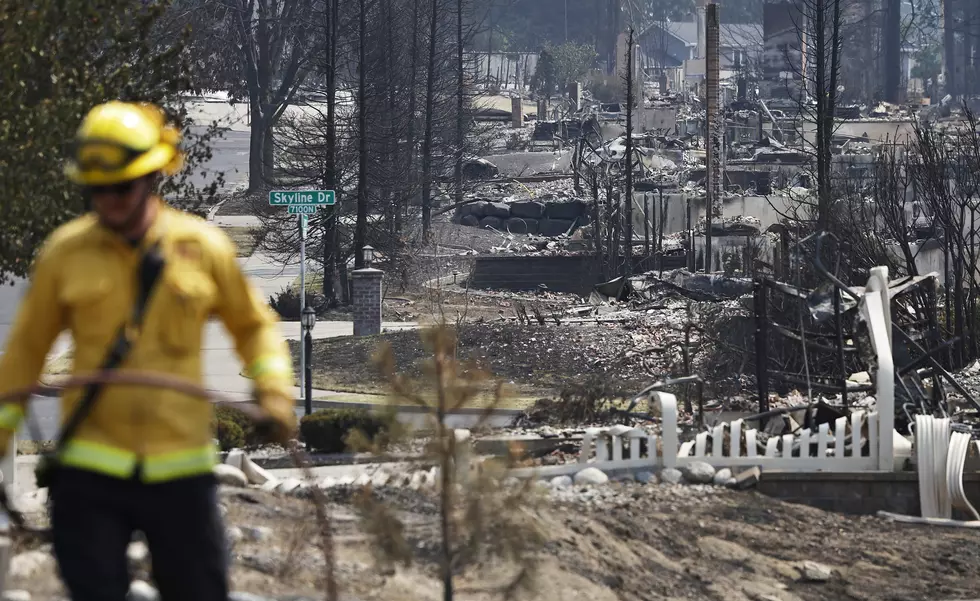
The combined fires in the Spokane area have burned over 900 structures and 10,000 acres, but no deaths or serious injuries have been reported as of Monday. The Old Trails Fire that Farinacci is charged with starting has destroyed nearly 700 homes and burned more than 3,000 acres.
Faronacci has also confessed to starting more than two dozen fires in the Spokane area dating back more than a year, court records show.
Intent of crime
Thornbro said one of the main differences between first-degree murder and manslaughter is “mental intent.”
Thornbro told The Center Square that the first-degree murder standard is “higher” than manslaughter and “more difficult to prove.”
Under Arizona law, a person commits first-degree murder if “intending or knowing the person’s conduct will cause death…with premeditation.” For manslaughter, state law defines a person commits this crime by “recklessly causing the death of another person.”
Cully Stimson, a former homicide prosecutor, said prosecutors working a case like Farinacci would review the forensic evidence and determine how much time elapsed before the shooting. A longer period could indicate premeditation, while a shorter period could suggest the shooting was a spontaneous act.
He told The Center Square that “oftentimes the overlap between what the sentence for first-degree premeditated murder and the upper end of the sentence for voluntary manslaughter can be close.”
Stimson, who is the current acting director of the Heritage Foundation's Legal Policy Center, said it does happen where prosecutors go from a first-degree murder charge to a plea deal involving manslaughter, adding that it “doesn’t mean there’s a lack of sufficiency of evidence.”
Move to Washington
After Farinacci got out of prison, he was placed on probation in Arizona and requested a transfer of probation to Washington in 2021, according to court records. The next year, Washington accepted the transfer of probation request, court records say, which means he was under courtesy supervision.
According to court records, in 2023, Farinacci’s probation officer in Arizona said he had obtained a full-time job and “maintained stable residence with his girlfriend and her family” in Spokane.
“The girlfriend and her family are a positive pro-social support for the offender,” a court record said.
The document also noted he had “not completed a mental health evaluation and any domestic violence treatment.” Farinacci got reprimanded numerous times for not complying with these orders, the document said.
Farinacci ended his probation in 2024 after three years.
Stimson said Farinacci “had good time credits that he earned, which shortened the actual time he served.” Arizona law requires felony inmates to serve at least 85% of their sentence.
Dennisse Ley, who is the executive director of a victim rights group called Homicide Survivors, Inc., said that for most families, when they find out a person is getting a reduced sentence or getting out of prison sooner than expected, “it can feel like the loss is being minimized and that the accountability they were promised has changed.”
“For families, this is not just a legal decision," she wrote in a statement. "It is deeply personal because their loved one is still gone."
Ley added that her office has worked with a prosecutor’s office “to find surviving family members so we can communicate with them if changes are happening, explain why they are happening, and discuss what can be done.”
“That communication matters," she wrote. "When families are not reached or do not understand why something is happening, it can deepen the feeling that the justice system has failed them.
“Families can feel that the offender’s future is being weighed more heavily than the victim’s life and the family’s pain," she added. "Even when a decision is legal, it can still feel deeply unfair to those who have already lost so much."
Farinacci is currently in jail on a $2 million bond, and a court has ordered a mental health competency evaluation in his case.